
Witnesses to history emerge from random sources. This unusual story comes from an Uncle writing to a Niece about her Father’s [Durant Bulman’s] war-time experience.[1]
“Your father [enrolled] at Roanoke College, Salem, Va., sometime in September, 1864…remaining there about one month only…when he was drafted into the Confederate Service. He ran away and proceeded to Richmond, Va., where he was hidden and sheltered by Miss Elizabeth Van Lew, the famed Union spy who resided in Richmond all during the war, affording protection to escaped Union prisoners from old Libby prison, and never once was caught at it. Well, Miss Van Lew, who knew well both my father and your father, aided your father to escape the Confederate Secret Service Agents, who trailed him to her home, seeking to arrest and shoot him for a deserter to their cause, by hiding your father in a large box, concealed in her cellar under a large heap of coal.
She kept your father concealed there for three days and nights; then she managed to smuggle your father through the Confederate lines and out on the Williamsburg road. She sent him with a code written note, hidden in his ear by enveloping it into a gelatin capsule, with instructions to make his way to Fortress Monroe, at Old Po[i]nt Comfort, and to present the note to General Benjamin F. Butler…
Your father arrived in Fortress Monroe and presented his note…to General Butler, who asked him what he wanted to do. Your father stated that he wanted to enlist in the Federal Army. General Butler told him that he (Butler) was not robbing cradles just jet – your father was only eighteen years old at the time – but Butler did enlist him the Federal Service; however Butler refused to place in him in the line of battle, but appointed him a Provost Guard, to guard Confederate prisoners from Old Point Comfort to Washington, said prisoners who were to be confined in the Old Capital[2] at Washington until the cessation of the wars.”
Fact, Fiction and Missing?
The Uncle had also said: “[P]lease bear in mind that all I can write is from memory…hearsay evidence to the Nth degree…” But some parts are verifiable.
1) Van Lew was indeed a spy in Richmond. She ran a network of people that collected and passed on data to the Union side, from 1864-1865. In addition, starting in 1861 she organized aid for Union prisoners and assisted in escape attempts from Libby Prison.
This network included both Black and White secret Unionists, with Mary Jane Richards Denman [aka Mary Bowser] one of the most important. At one point, Denman – who had earlier been freed by Van Lew and educated in the North – even worked inside the home of Jefferson Davis. Spies were used on both sides of the war, of course, and gender was not a barrier. In fact, the tendency to underestimate people due to race and/or gender was highly beneficial.[3]
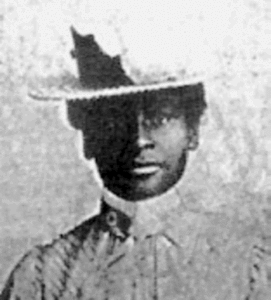
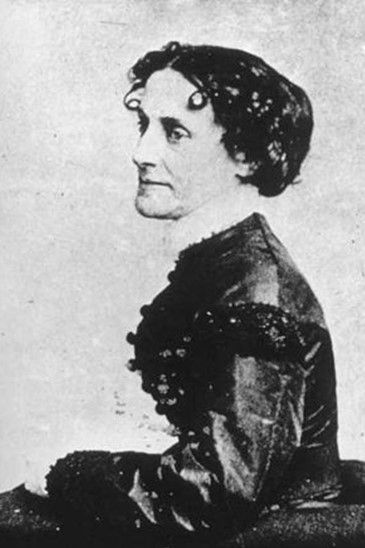
2) Why did Bulman choose to flee and to fight for the North? We don’t know. His family was well established in Virginia’s King and Queen County. Did his family’s connection to Van Lew play a part? She too was an established Virginian, although her family was originally from the North.
Perhaps her support for the abolition movement was shared by some of Bulman’s family? The family seemed to be divided during the war. One of Bulman’s cousins, for instance, was in a group of Confederate prisoners he was guarding [per family letter].
Maybe Bulman wanted to join the Northern army to show that he was not a coward? He had fled the Confederate service in 1864, so well into the war and when Richmond was already under siege. We simply don’t have enough information to know his thinking.
3) General Butler’s reason for not sending Bulman out to fight due to age seems odd. Eighteen, in fact, was a common age for soldiers at the time. In theory the minimum age for recruitment, but even that was ignored for roles such as drummer boy. They were sometimes as young as 12.
What we do know: the war’s “brother against brother” of family divisions was true within as well as between the South and the North. Van Lew, for instance, was able to convince her mother to free the enslaved servants only after her father had died. And at least one, possibly more, of those former servants chose to risk death in order for liberty and justice to be won for all.
[1] Letter dated 1932 from papers of the Bulman-Davidson Family. Picture from Heritage Auction site, Bulman’s silver badge with hand-done Masonic symbols on reverse.
[2] The ‘Old Brick Capitol’ was briefly owned by the National Woman’s Party before being torn down in 1929.
[3] For more about Elizabeth Van Lew and Mary Jane Richards Denman: see Southern Lady Yankee Spy, Elizabeth Varon. Denman’s story is less documented than Van Lew’s, due to lack of primary sources. A historical fiction, The Secrets of Mary Bowser by Lois Leveen, is based on her life, but no definitive biography has been published.

 Eye-Witness History
Leave a comment